What Should I Do With My AC in the Winter?
Summer’s over. The AC sits out back while the furnace takes the night shift. Then the first snow hits and you wonder: should I cover that thing? Shut it off? Leave it alone?
In Southwest Michigan, the outdoor unit spends months in snow, ice, and lake-effect slush. A few simple habits help it come back strong in the spring.
One warning up front: if you have a heat pump, a lot of this does not apply to you. Jump to the heat pump section first.
Do I need to do anything with my AC in the winter?
Short answer: Not much. Keep the outdoor unit clear, keep it level, and don’t run it in freezing weather.
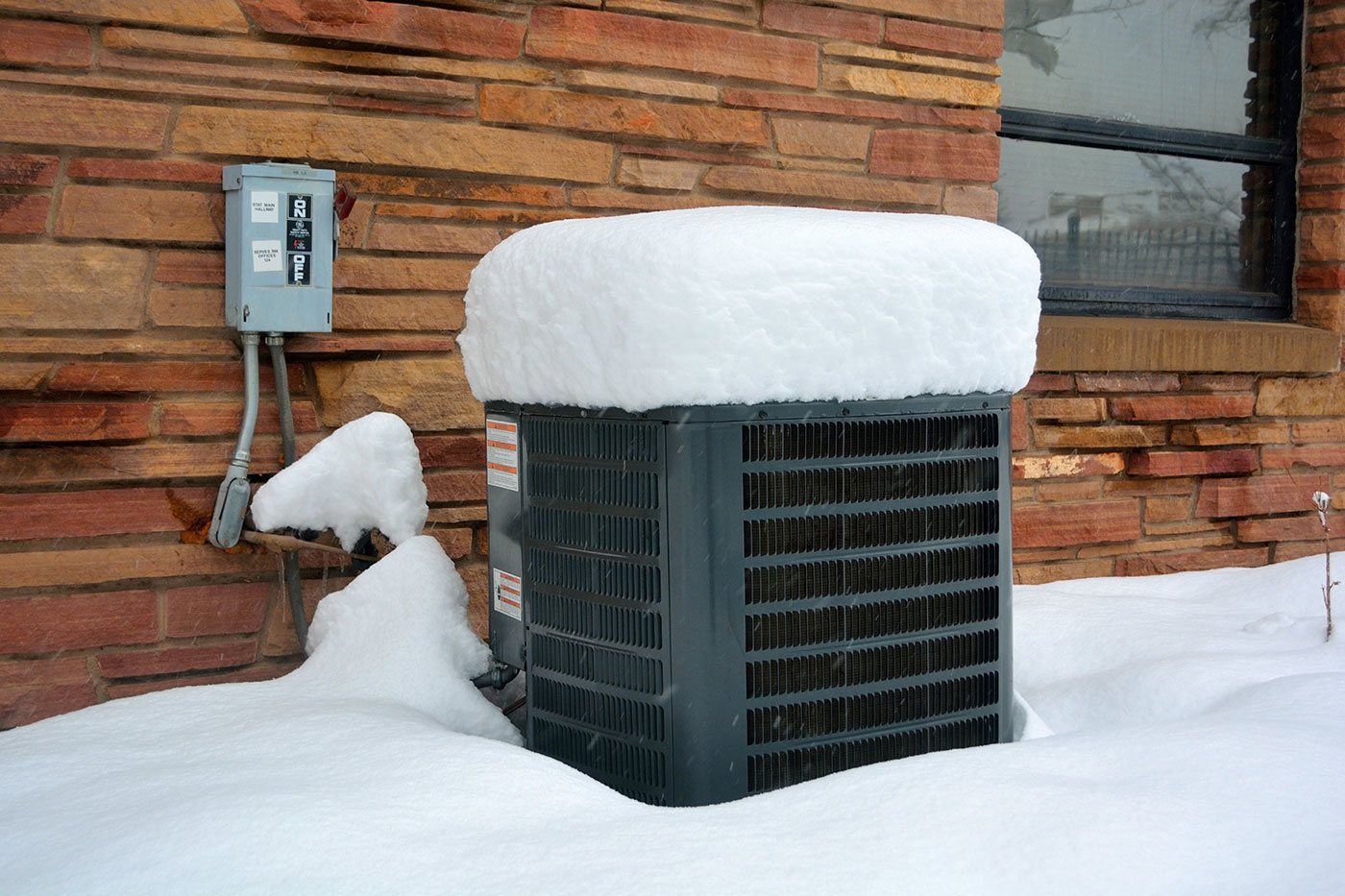
Your outdoor unit (the condenser) is built to live outside. Rain, snow, and cold are part of the job. It doesn’t need babying. It just needs a quick look now and then so snow, ice, and leaves don’t pile up on it.
Should I cover my AC unit for the winter?
Short answer: Never wrap it fully in plastic or a tarp. A breathable cover on the top only, or a piece of plywood on top, is fine. Leaving it uncovered is fine too.
A full plastic wrap seems like a good idea. It isn’t.
- It traps moisture. Condensation builds up inside with nowhere to go. That can rust parts and corrode the coil.
- It invites critters. A wrapped unit is a dry, sheltered spot. Mice love it, and they chew wiring.
- It hides problems. You can’t see damage or a nest under a tarp.
If you want some protection, cover the top only. A breathable top cover works. So does a piece of plywood weighted down on top. That keeps falling ice and icicles off the fan and coil while the sides stay open to breathe.
Or just leave it alone. Plenty of units go through Michigan winters uncovered and do fine.
How do I keep snow and ice off my outdoor unit?
Short answer: Clear snow, ice, and leaves from around it, keep a couple of feet of open space, and watch for roof drip lines and icicles above it.
After a big snow, brush snow off the top and away from the sides with a broom. Keep a couple of feet clear all the way around.
Look up, too. A lot of units sit right under a roof edge. Melting snow drips off the gutter, refreezes, and builds ice on top of the unit. Big icicles can drop and bend the fan or top panel. A top cover or plywood helps. Fixing the drip line helps more.
One big rule: don’t chip ice off the unit with a shovel, scraper, or anything sharp. The coil fins bend easily, and a tool can puncture a refrigerant line. Let the ice melt on its own, or call us.
What if my AC unit is leaning or not level?
Short answer: Call us. A tilted unit can strain parts and lines, and it’s easier to fix early.
Michigan ground moves. Frost heave can push a pad up. Soft soil can let it sink. A leaning unit puts stress on the refrigerant lines and the parts inside. Check it a few times over the winter, especially after a thaw. If it’s clearly tilted, don’t try to jack it up yourself.
Can I run my AC when it’s freezing outside?
Short answer: No. A standard AC isn’t designed to run in freezing temperatures, and doing it can damage the compressor.
A sunny winter afternoon can make one room feel stuffy. It’s tempting to flip on the AC. Don’t. AC systems are built to cool when it’s warm outside, and the compressor is the most expensive part of the system.
If a room gets stuffy, crack a window, run the fan only, or adjust your heat.
Should I turn off the power to my AC for the winter?
Short answer: If you have an AC-only system (not a heat pump), you can switch off the outdoor disconnect for the winter. Turn it back on well before you need cooling in the spring.
The disconnect is the small box on the wall near your outdoor unit. Switching it off means the AC can’t kick on by accident during a warm spell or if someone bumps the thermostat.
The spring part matters just as much. Many manufacturers recommend restoring power several hours before the first run, so the compressor’s crankcase heater can warm up. Flip it back on well ahead of the first hot day, and check your owner’s manual. A spring AC check-up is a good time to handle this too.
I have a heat pump. Is any of this different?
Short answer: Yes, very different. A heat pump heats your home all winter. Never cover it, never shut off its disconnect, and keep it clear of snow.
A heat pump looks a lot like an AC unit. It isn’t taking the winter off. It’s moving heat into your house every cold day.
If you have a heat pump:
- Don’t cover it. No plastic, no top cover, no plywood. It needs open airflow to heat your home.
- Don’t shut off the outdoor disconnect. That cuts off your heat.
- Keep snow and ice clear, with a couple of feet of space around it.
- Watch the drip line above it. Water refreezing on a heat pump is a real problem.
- Steam or frost is normal. Heat pumps run defrost cycles. Steam coming off the unit, or light frost that clears on its own, is the system doing its job.
What’s not normal: a heat pump that stays encased in ice and isn’t clearing. That’s a call.
Not sure what you have? Check the label on the outdoor unit, look for an “aux heat” or “emergency heat” setting on your thermostat, or just call us.
What about the indoor side of my AC?
Short answer: Keep changing your filter, keep the condensate drain and vents clear, and keep mice out.
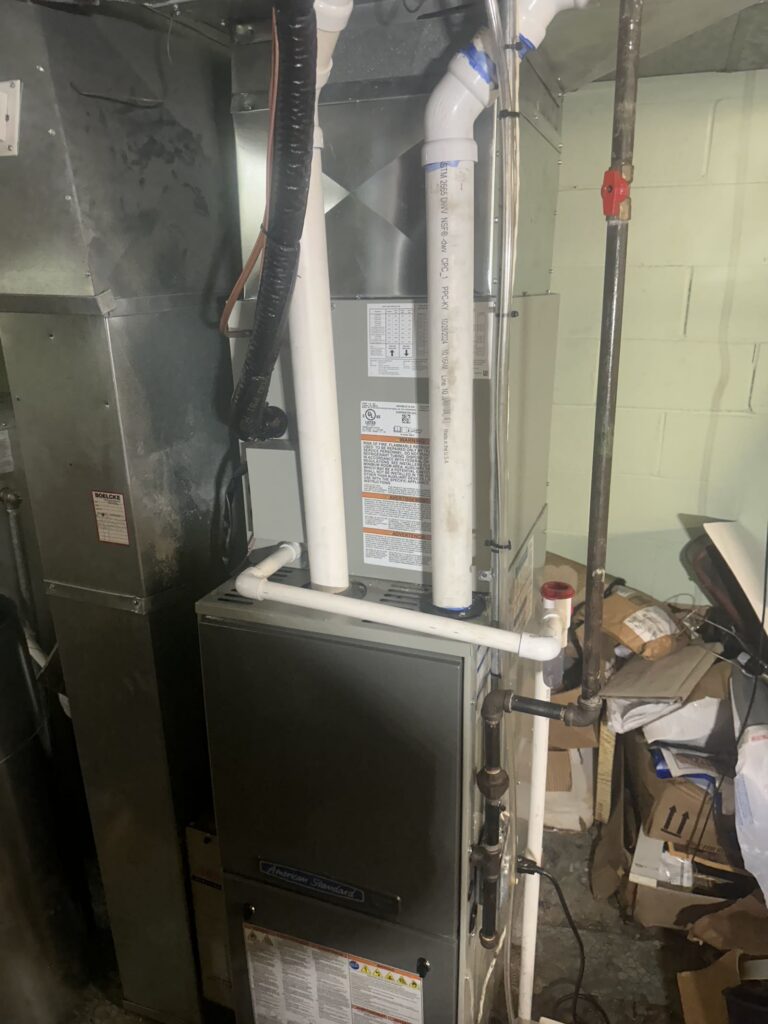
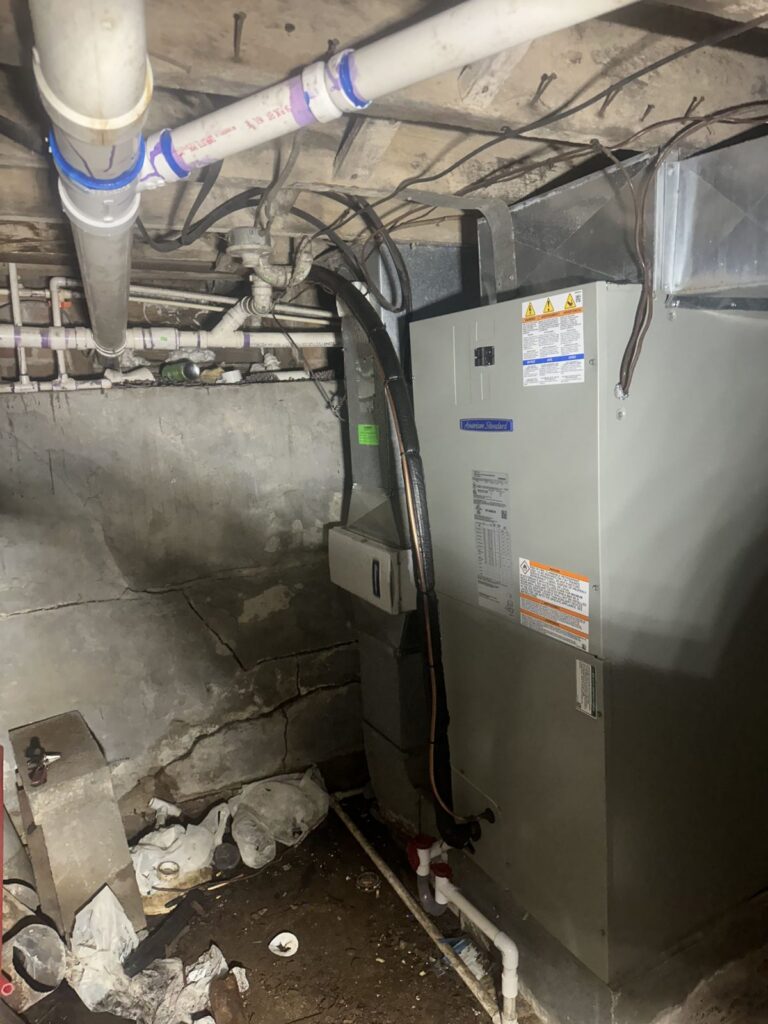
In most homes, the furnace and AC share the same filter and blower. The filter you change for your furnace is the same one your AC uses, so keep up with it all winter.
- Keep vents and returns open. Don’t block them with furniture or storage.
- Keep the condensate drain clear. On a high-efficiency furnace, it’s working all winter.
- Keep mice out. Mice hunt for warm, quiet spots in the fall. Keep the area around your equipment tidy, and watch for droppings or chewed insulation near the unit and where lines enter the house.
When should I call about my AC in the winter?
Short answer: Call if you see damage, a leaning unit, or a heat pump stuck in ice. Then plan a spring AC check-up.
Give us a call if:
- A branch, icicle, or snow load dented or bent the unit
- The unit is leaning or the pad has shifted
- Your heat pump is covered in ice and not clearing
- You find signs of rodents in or around it
- You’re not sure if you have an AC or a heat pump
Before summer, book a spring AC check-up so it starts up right after a long Michigan winter. A maintenance plan keeps both the AC and heating side on schedule.
Boss Services is a local, veteran-owned team serving Benton Harbor, St. Joe, Harbor Country, and all of Southwest Michigan. We work on ACs, heat pumps, furnaces, boilers, and geothermal systems, and we explain things in plain English.
Soft next step
Questions about your AC or heat pump this winter? We’re happy to help.
Schedule online or call 269-468-6682.